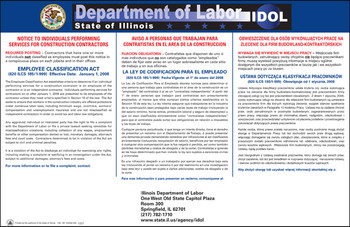


Description
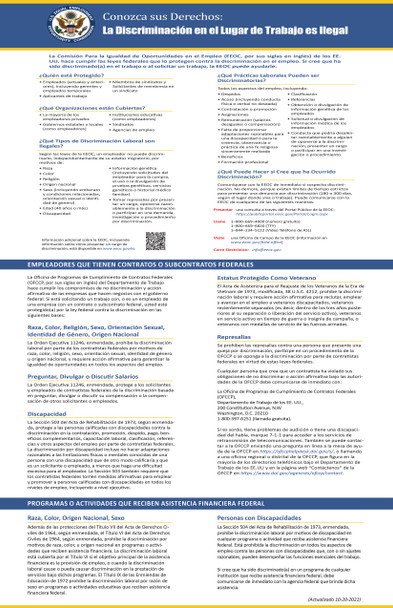
EEOC Know Your Rights: Workplace Discrimination Is Illegal Poster
Help satisfy federal Equal Employment Opportunity posting requirements with the EEOC Know Your Rights: Workplace Discrimination Is Illegal Poster. This 11 x 17-inch federal workplace notice informs employees and job applicants about federal employment discrimination protections and explains how individuals can contact the U.S. Equal Employment Opportunity Commission (EEOC) if they believe their rights have been violated.
Federal laws enforced by the EEOC prohibit covered employers from discriminating against employees and applicants based on protected characteristics and prohibit retaliation against individuals for exercising protected employment rights.
What Is the EEOC Know Your Rights Poster?
The Know Your Rights: Workplace Discrimination Is Illegal poster is the official workplace discrimination notice issued by the U.S. Equal Employment Opportunity Commission.
The poster summarizes federal employment discrimination laws, identifies protected characteristics, explains employee and applicant rights, and provides information about contacting the EEOC and filing a charge of discrimination.
What Types of Employment Discrimination Are Prohibited?
Federal laws enforced by the EEOC prohibit covered employers from discriminating against employees or applicants based on protected characteristics that include:
- Race
- Color
- Religion
- National origin
- Sex, including pregnancy and related conditions
- Sexual orientation
- Transgender status
- Age 40 and older
- Disability
- Genetic information
- Retaliation for exercising protected employment discrimination rights
What Employment Practices Are Covered?
Federal employment discrimination protections can apply to many aspects of employment, including:
- Recruiting and hiring
- Job assignments
- Promotions
- Pay and compensation
- Benefits
- Training
- Discipline
- Layoffs and termination
- Harassment
- Reasonable accommodations
- Employment classifications
- Referrals
- Other terms and conditions of employment
Pregnancy and the Pregnant Workers Fairness Act
The current EEOC Know Your Rights poster includes information about protections under the Pregnant Workers Fairness Act (PWFA).
The PWFA requires covered employers to provide reasonable accommodations for known limitations related to pregnancy, childbirth, or related medical conditions unless providing the accommodation would cause an undue hardship.
Federal law also protects employees and applicants from certain discrimination based on pregnancy, childbirth, and related medical conditions.
Disability and Reasonable Accommodation
Federal disability discrimination law protects qualified individuals with disabilities from unlawful employment discrimination.
Covered employers may be required to provide reasonable accommodations that enable a qualified individual with a disability to apply for a job, perform essential job functions, or enjoy equal benefits and privileges of employment unless providing the accommodation would create an undue hardship.
Religious Accommodation
Title VII also protects employees and applicants from discrimination because of sincerely held religious beliefs, observances, and practices.
Covered employers may be required to provide reasonable religious accommodations unless doing so would impose an undue hardship under applicable federal law.
Protection Against Workplace Harassment
Harassment can be a prohibited form of employment discrimination when it is based on a characteristic protected by federal law and meets applicable legal standards.
Federal protections can apply to harassment based on race, color, religion, national origin, sex, age, disability, genetic information, or another characteristic protected by applicable employment discrimination law.
Protection Against Retaliation
Federal employment discrimination laws prohibit retaliation against employees or applicants for engaging in certain protected activities.
Protected activity can include:
- Filing a charge of discrimination
- Participating in an EEOC investigation or proceeding
- Providing information in an employment discrimination investigation
- Reasonably opposing conduct believed to be discriminatory
- Requesting certain reasonable accommodations
- Exercising other rights protected by applicable federal employment discrimination laws
Who Is Covered by Federal EEO Laws?
Coverage varies depending on the particular federal employment discrimination law. For example, Title VII of the Civil Rights Act, the Americans with Disabilities Act, and the Pregnant Workers Fairness Act generally apply to employers with 15 or more employees.
The Age Discrimination in Employment Act generally applies to employers with 20 or more employees.
Additional federal, state, or local employment discrimination laws may apply to smaller employers or provide protections beyond federal requirements.
Who Must Post the EEOC Know Your Rights Poster?
Employers covered by applicable federal employment discrimination laws must display the EEOC's Know Your Rights: Workplace Discrimination Is Illegal notice.
The poster must be displayed prominently in a conspicuous location where employees and applicants for employment can readily see it.
Where Should the EEOC Poster Be Displayed?
The EEOC notice should be displayed where employee and applicant notices are customarily posted.
Appropriate locations may include:
- Employee bulletin boards
- Employee entrances
- Human Resources areas
- Applicant and interview areas
- Break rooms
- Time-clock areas
- Other conspicuous locations accessible to employees and applicants
EEOC Poster Accessibility and Electronic Posting
Employers should ensure that the EEOC notice is accessible to employees and applicants, including individuals with disabilities that affect their ability to see or read a physical poster.
Electronic versions of the notice can provide additional accessibility for remote workers and individuals using screen readers or other assistive technology. Employers should evaluate their workforce and recruiting practices when determining whether additional electronic access is appropriate.
Is the EEOC Poster Available in Other Languages?
The U.S. Equal Employment Opportunity Commission provides the Know Your Rights poster in English, Spanish, and several additional languages.
Employers may display additional language versions to help employees and applicants understand their federal employment discrimination rights.
How Can an Employee File an EEOC Charge?
Employees and applicants who believe they have experienced unlawful employment discrimination may contact the U.S. Equal Employment Opportunity Commission (EEOC).
Depending on the circumstances, an individual may be able to begin the process through the EEOC Public Portal or contact an EEOC office for information and assistance.
Federal employment discrimination claims are subject to filing deadlines, so individuals who believe their rights have been violated should act promptly.
How Long Does an Employee Have to File an EEOC Charge?
In many cases, an employment discrimination charge must be filed with the EEOC within 180 calendar days from the date of the alleged discrimination.
The deadline may be extended to 300 calendar days when a state or local agency enforces a law prohibiting employment discrimination on the same basis.
Different deadlines or procedures can apply in certain circumstances, including federal-sector employment.
EEOC vs. OFCCP: What Is the Difference?
The EEOC enforces federal employment discrimination laws that apply to covered employers and protects employees and applicants from prohibited employment discrimination.
The Office of Federal Contract Compliance Programs (OFCCP) is part of the U.S. Department of Labor and administers certain nondiscrimination and affirmative-action requirements applicable to covered federal contractors and subcontractors.
Federal contractors may therefore have additional obligations beyond the standard EEOC workplace posting requirements.
Is the EEOC Know Your Rights Poster Federally Required?
Yes, for employers covered by the applicable federal employment discrimination laws. Covered employers must prominently display the required notice where employees and applicants for employment can readily see it.
Failure to display the required notice can result in penalties and may affect applicable filing deadlines for certain employment discrimination claims.
Current EEOC Poster Version
The current EEOC Know Your Rights: Workplace Discrimination Is Illegal poster is the version revised June 27, 2023 to include information about the Pregnant Workers Fairness Act.
Employers should ensure that they are displaying the current required version rather than the older EEO is the Law poster or an earlier version of the Know Your Rights notice.
EEOC Know Your Rights Poster Specifications
- 11"W x 17"H
- Portrait orientation
- Printed in full color
- Laminated with high-quality laminate
- Available in English and Spanish
- Federal employment discrimination rights notice
Federal Workplace Posting and Compliance Resources
Labor Law Compliance Center provides employers with federal and state labor law posters, EEOC notices, employee rights postings, federal contractor notices, and compliance resources throughout the United States. Browse our Federal Labor Law Posters for additional individual federal workplace notices and compliance products.